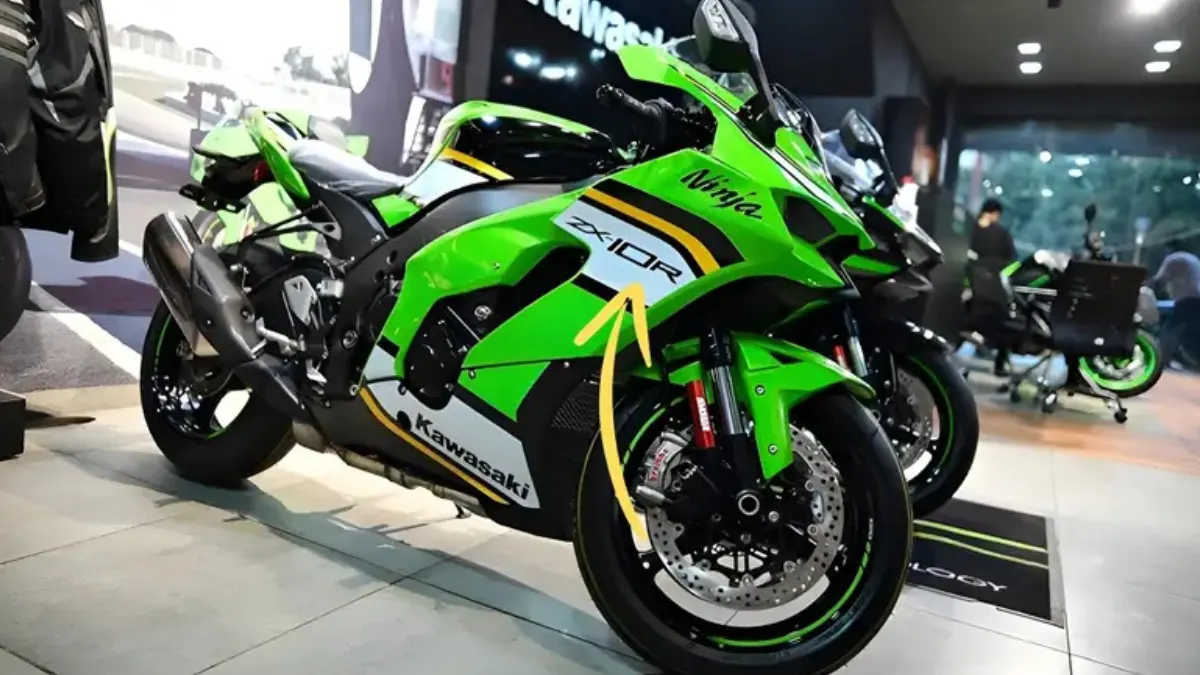
In the stratosphere of hyper-performance motorcycles, where rules are written by physics and ambition, one machine exists as a law unto itself. The Kawasaki Ninja H2R is not merely a motorcycle; it is a statement of mechanical audacity, a track-only weapon engineered to shatter the very concept of what is possible on two wheels. It transcends the traditional categories of sportbike and hyperbike, existing in a realm defined by its centrifugal supercharger, aerospace-inspired design, and a power output that borders on the incomprehensible. The Kawasaki Ninja H2R is the ultimate expression of “more,” built without compromise for the singular purpose of delivering mind-warping acceleration and speed.
The Heart of a Beast: The Supercharged Powerplant
The soul of this mechanical predator is its 998cc, inline-four, centrifugal supercharged engine. This is not a simple forced-induction system; it is a masterpiece of engineering developed in conjunction with Kawasaki’s Gas Turbine and Aerospace divisions. The supercharger, spinning at over 100,000 RPM, force-feeds the engine an immense volume of air, generating colossal boost and power figures that dwarf any naturally aspirated rival. The result is an ungodly 310 horsepower (with ram air) and an overwhelming wave of torque that is delivered with a violent, relentless urgency. The sound of the Kawasaki Ninja H2R is a unique mix of a high-pitched supercharger whine and a guttural, explosive exhaust note, a symphony that announces the arrival of pure, unadulterated power.

Aerodynamic Alchemy: Wings, Ducts, and Downforce
To harness and control its earth-shattering power, the H2R’s design is pure aerodynamic science. Its bodywork is a complex ecosystem of wings, ducts, and vents, all crafted from carbon fiber to manage airflow, cooling, and stability. The massive front winglets are not for show; they generate significant downforce to keep the front wheel planted and prevent wheelies at speeds where aerodynamic lift becomes a formidable force. The unique “face” with its central ram-air duct and flanking LED strips is designed for maximum air intake and heat dissipation. Every surface of the Kawasaki Ninja H2R is engineered to cut through the air with minimal drag while creating stability, making it look like a machine that has escaped from a wind tunnel.
A Chassis Built for Containment and Control
Containing this level of performance requires an equally radical chassis. The H2R utilizes a trellis frame made of chromoly steel, designed for immense rigidity to handle the stresses of immense power and high-speed cornering. The suspension is top-specification, featuring fully adjustable Öhlins electronic forks and a TTX36 rear shock, allowing for micrometer-perfect setup for track conditions. Braking is handled by race-spec Brembo Stylema monobloc calipers biting on massive discs, capable of scrubbing off triple-digit speed with staggering force. The Kawasaki Ninja H2R is a study in balance—its components are tasked not just with enabling speed, but with providing the rider the superhuman levels of control needed to exploit it.
The Philosophy of Excess: A Machine Without Compromise
The ethos behind the H2R is one of absolute, uncompromising excess. It is a “circuit-only” model, devoid of headlights, mirrors, or a street-legal exhaust, freeing engineers from any regulatory constraints. Its electronics suite, including Kawasaki Launch Control Mode (KLCM), Engine Brake Control, and multi-mode traction control, is fine-tuned for the racetrack. Riding the Kawasaki Ninja H2R is an act of immense concentration and skill; it is not a forgiving machine. It is a tool for experienced riders and professional racers to explore the absolute outer limits of acceleration and velocity, a privilege granted only to those with the talent and courage to command it.
The Kawasaki Ninja H2R stands as a monument to engineering ambition. It is the fastest, most powerful production motorcycle ever built by a major manufacturer, a rolling testament to what happens when a company unleashes its most brilliant minds without restriction. It represents the zenith of internal combustion motorcycle technology, a screaming, supercharged icon that exists not to win races in a specific class, but to win the endless race against physics itself. It is, and may forever remain, the ultimate predator of the asphalt.